
Logwood
Logwood (Haematoxylum campechianum) is the heartwood of a tree native to Central America and Mexico, and dyers have used it for centuries. On its own it gives purples. Layered with other dyes it can go deep blue, grey or nearly black. Dark colors are hard to reach with natural dyes, and logwood opens up a much darker palette, adding depth to everything else the natural palette can do.
It has a dark history to match. Logwood reached Europe in the 1500s and became one of the most important sources of black for the next three centuries. Its trade ran through the Caribbean at the height of piracy: logwood cutters on the coast of the Bay of Campeche included former buccaneers, and pirates raided ships carrying it. The black of the Jolly Roger may well have come from logwood.
Logwood is only one road to black, though. We'll cover natural blacks in their own journal entry soon.
Starting clean
Every piece starts with a wash and a hot scour to lift out the oils and finishes that come with new fabric. Dye only takes where the fiber is clean, so this step is slow, unglamorous, and matters more than any other.
Tannins and a mordant
Linen, hemp and cotton are plant fibers, and plant fibers need help holding on to color. Tannin baths come first: tannic acid for the tee, oak galls and pomegranate rind for the linen. A mineral mordant bath follows, which works with the tannins to fix the color and steer how the logwood turns out.
The tee: logwood purple
The tee is a light hemp and cotton jersey, and here logwood carries the color on its own. After the scour it goes through the tannin and an aluminum mordant, then a chalk bath that locks the mordant into the fiber.
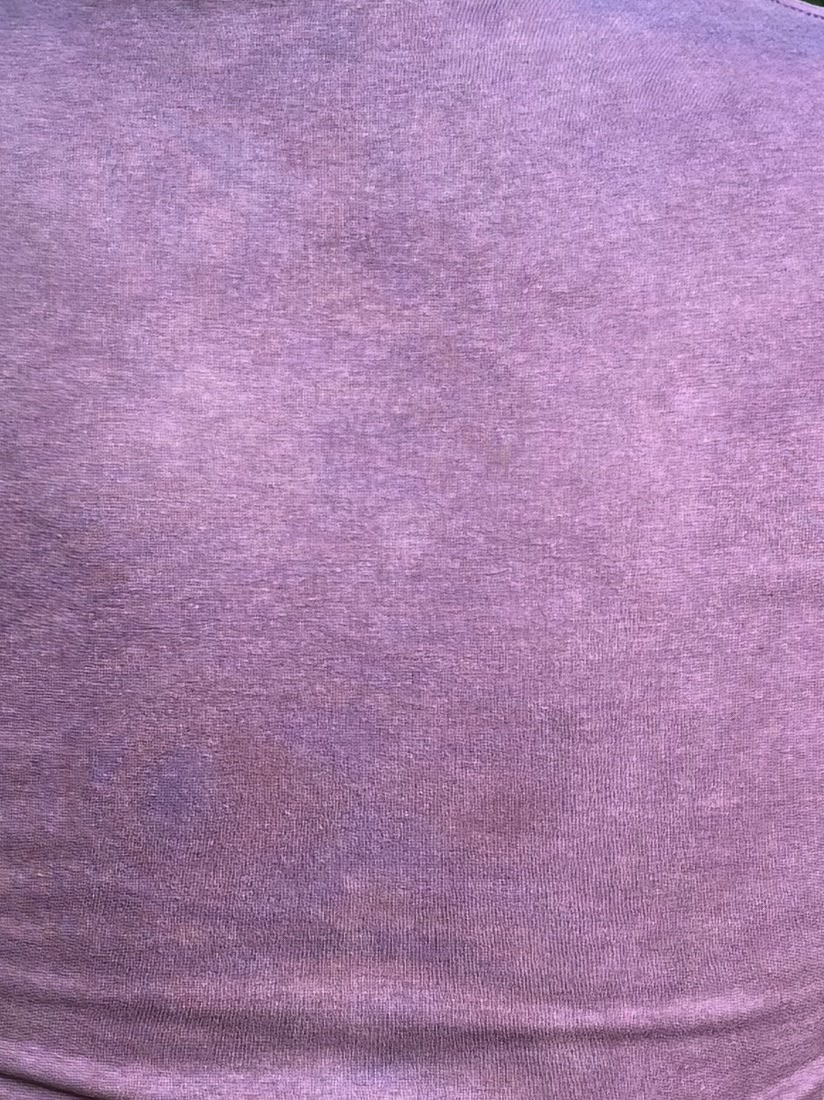
The logwood came from Botanical Colors, both their liquid logwood extract and logwood chips. Logwood is a sensitive dye: the same bath can lean red, purple or blue depending on the water, its pH and how much calcium is in it, so a little chalk goes in with the dye to keep it on the purple side. The tee goes into the warm bath, gets worked gently so the color takes evenly, and is left to steep. It comes out a deep purple that softens a shade once it's rinsed and dry, into the heathered, gently mottled color above.
Indigo with logwood on linen
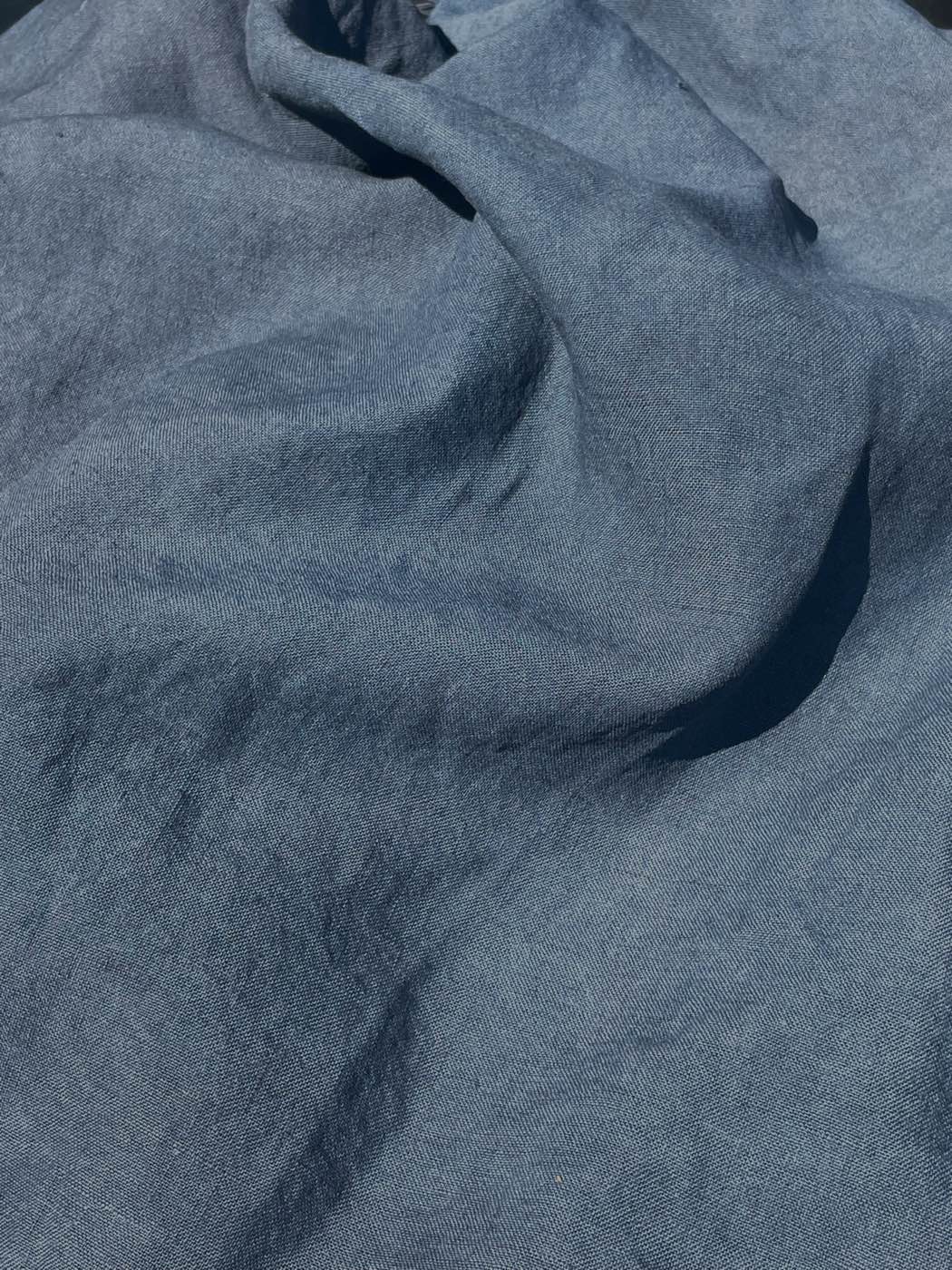
Logwood also layers beautifully with indigo. This linen yardage goes back and forth between the indigo vat and the logwood bath. In the vat it comes out green and turns blue as it meets the air. The logwood then deepens and cools that blue. Each round goes a little darker, and the whole cycle repeats over several days. Rushed, it comes out patchy, so it isn't rushed.
The result is a slate blue with some depth to it: not flat, but layered, the way a color you've built by hand is. What this linen becomes is a story for a future entry.
Finishing
The tee and the linen end the same way: rinse after rinse until the water runs clear, a gentle dry away from direct sun, and a press. Logwood is happiest kept out of strong sunlight, which is worth remembering when you wear and wash it.
Every piece is dyed by hand. Color varies. That's part of it.
Want to dye the purple yourself? The full recipe is coming soon to the shop: the exact ratios and amounts, the temperatures and timings, and every step of the process from scour to final rinse.